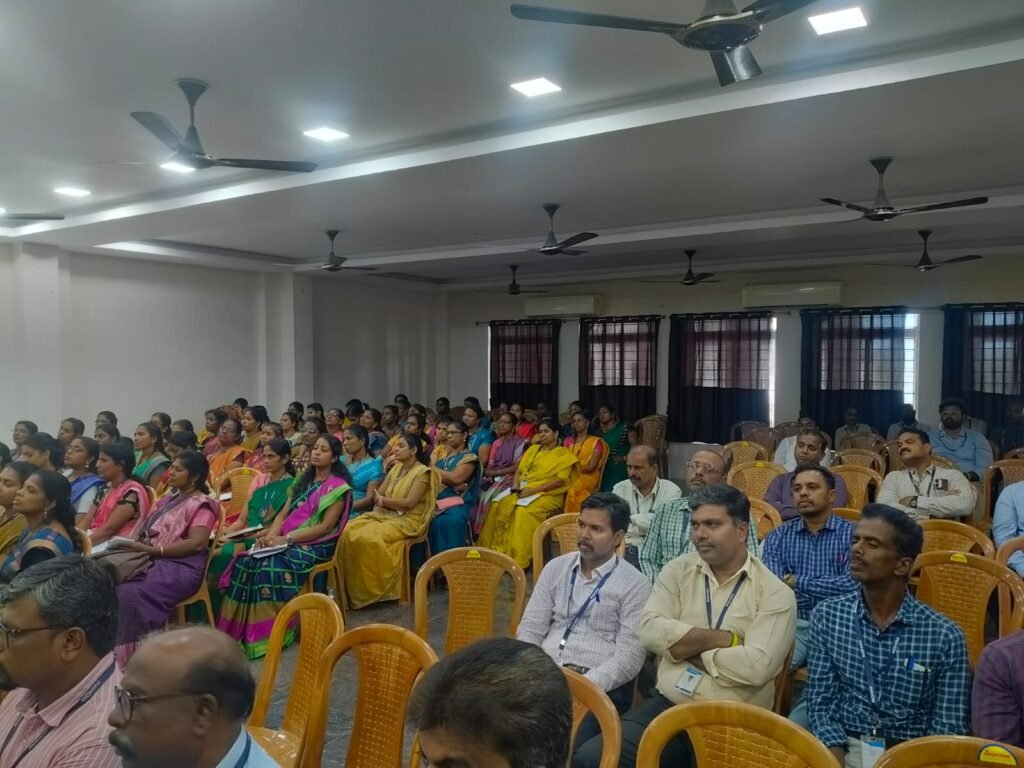
The Internal Quality Assurance Cell (IQAC) of Rohini College of Engineering and Technology (Autonomous), Kanyakumari, successfully organized a 4-Day Faculty Development Programme (FDP) on “Next Generation Teachers” from 22nd June 2026 to 25th June 2026. The programme was organized with the objective of equipping faculty members with contemporary teaching methodologies, digital technologies, research skills, mentoring practices, and innovative approaches required to become future-ready educators.
Day 1 – Foundation for Next Generation Teaching (22.06.2026)
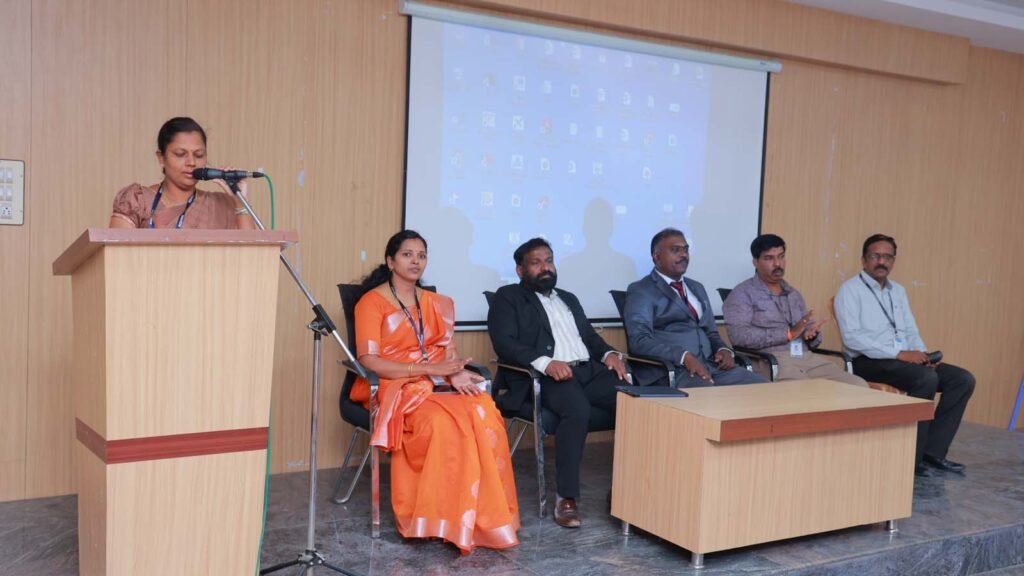
The programme commenced with registration of participants, followed by the inaugural session. The inaugural address highlighted the importance of continuous professional development and the evolving role of educators in higher education. Dr. R. Sowmiya, Associate professor/DoEC delivered the welcome address.
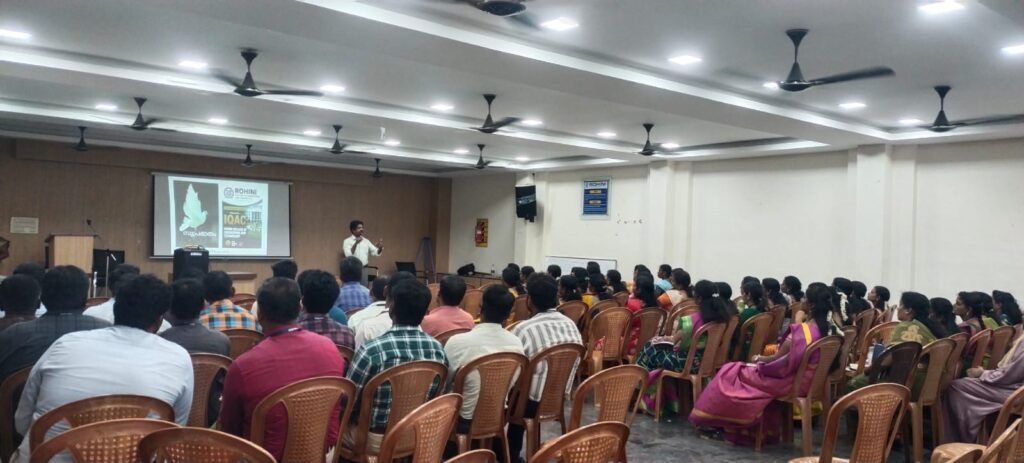
The first technical session was delivered by Dr. T. Ruben Deva Prakash on “The Role of Next Generation Teachers in Higher Education.” The session focused on the changing expectations of higher education institutions and emphasized the need for faculty members to adopt innovative, technology-enabled, and student-centered teaching practices.
The second session was delivered by Dr. M.S. Starvin, Assistant Professor, Department of Mechanical Engineering, University College of Engineering, Nagercoil, on “Outcome-Based Education and Competency-Based Learning.” The session provided participants with a clear understanding of OBE principles, competency-based education, and strategies for aligning teaching and assessment with learning outcomes.
The final session of the day was handled by Dr. M. Reji, Professor and Head, Department of Electronics and Communication Engineering, on “Innovative Teaching Pedagogies, Active Learning, Flipped Classroom, and Project-Based Learning.” The session was highly interactive and included group discussions, enabling faculty members to share ideas and explore innovative classroom practices.
Day 2 – Digital Teaching and Assessment Excellence (23.06.2026)
The second day focused on integrating digital technologies into teaching and learning.
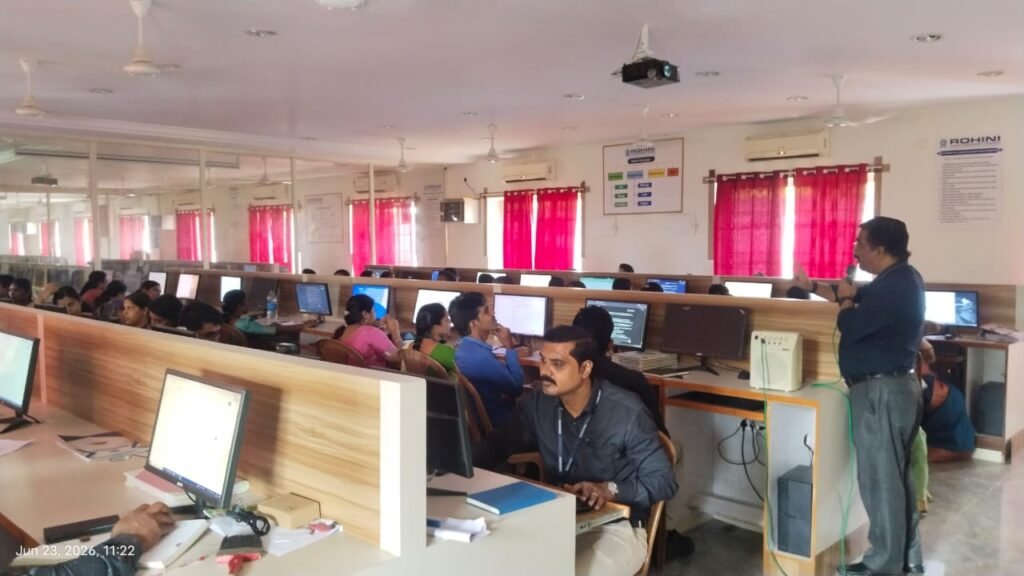
The morning session was conducted by Dr. V. Gopakumar, University Librarian, Digital University Kerala, who delivered informative sessions on AI Tools for Teaching, Learning and Content Creation, Developing Digital Learning Resources, and Research Paper Writing using AI Tools. The participants gained practical knowledge on effectively utilizing Artificial Intelligence to improve teaching, research, and content development.
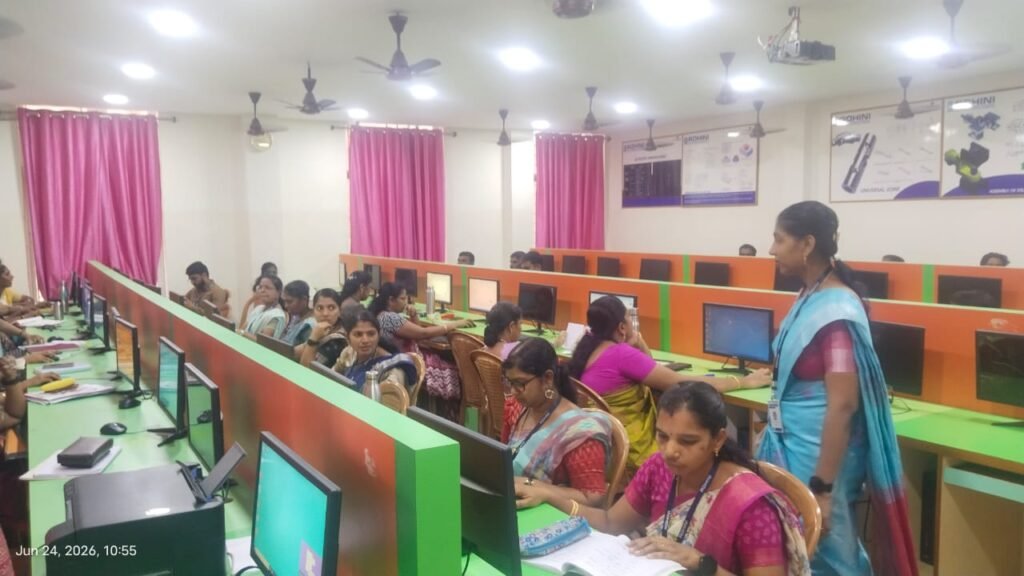
The afternoon hands-on workshop was conducted by Mrs. Haseena Beevi, Assistant Professor, RCET, on “Using AI and Learning Management Systems for Classroom Engagement.” The participants explored various digital platforms and AI tools that enhance classroom interaction, assessment, and student engagement through practical demonstrations.
Day 3 – Research, Mentoring and Professional Excellence (24.06.2026)
The third day concentrated on research, mentoring, and innovative teaching practices.
The first session was delivered by Dr. Naveena A. Priyadharshini, who presented an informative session on “Research Excellence: Publishing in High-Impact Journals.” The session emphasized quality research, publication ethics, journal selection, and strategies for publishing in reputed journals.
The second session was handled by Dr. Prem Shankari, Associate Professor and Head, Department of Management Studies, on “Student Mentoring, Counseling and Emotional Intelligence.” The session highlighted the importance of mentoring students, understanding their emotional well-being, and providing effective academic guidance.
The third session was delivered by Dr. M. Reji, Professor and Head, Department of Electronics and Communication Engineering, on “Innovative Teaching Pedagogies.” The
session encouraged faculty members to adopt learner-centered instructional strategies that promote active participation and critical thinking.
Day 4 – Academic Documentation, Innovation and Programme Valediction (25.06.2026)
The final day focused on academic documentation, innovation, and reflection.
The first session was delivered by Dr. N. Amutha Priya, Associate Professor and Head, Department of Electrical and Electronics Engineering, on “Designing the Blueprint – Optimizing Course Files and Logbooks for Effective Teaching.” The session provided detailed guidance on course file preparation, academic documentation, and best practices for maintaining quality records. She also explained the Code of Conduct of RCET, emphasizing professional ethics, institutional values, and responsibilities of faculty members.
The second session was delivered by Dr. Sherin Sam Jose, Professor, Department of Mechanical Engineering (Automobile), Amal Jyothi College of Engineering, on “A Journey of Product to Market.” The session inspired participants to transform innovative ideas and student projects into market-ready products through entrepreneurship and innovation.
The programme concluded with a Valedictory Session conducted by Dr. R. Baby Shalini, Associate Professor, Department of Electronics and Communication Engineering and IQAC Coordinator. During the session, faculty members from various departments shared their feedback, experiences, and key takeaways from the programme. Participants appreciated the relevance of the topics, the expertise of the resource persons, and the practical learning
opportunities provided throughout the programme. Certificates were distributed to the participants, and the programme concluded with a vote of thanks.
Outcomes of the Faculty Development Programme
The 4-Day Faculty Development Programme successfully achieved its objectives and provided valuable learning experiences for the participants. The key outcomes of the programme are as follows:
Faculty members gained a comprehensive understanding of the role of next-generation teachers in higher education.
Participants enhanced their knowledge of Outcome-Based Education (OBE) and Competency-Based Learning.
Faculty members learned innovative teaching pedagogies, active learning strategies, flipped classroom techniques, and project-based learning approaches.
Participants acquired practical knowledge of AI tools for teaching, content creation, digital learning resource development, and research.
Faculty members improved their understanding of research methodology, publication ethics, and publishing in high-impact journals.
Participants recognized the importance of student mentoring, counseling, and emotional intelligence in academic success.
Faculty members learned best practices in course file preparation, academic documentation, and maintaining quality records.
The programme encouraged innovation, entrepreneurship, and project-to-product conversion among educators.
Faculty members developed action plans to implement innovative teaching strategies, AI-enabled learning, and research practices in their respective departments.
The programme strengthened collaboration among faculty members and promoted a culture of continuous learning, innovation, and professional excellence.
The Four-Day Faculty Development Programme on “Next Generation Teachers” was successfully completed with active participation from faculty members across various departments. The programme effectively addressed the emerging needs of higher education by integrating innovative pedagogies, digital technologies, research excellence, mentoring practices, academic documentation, and entrepreneurship. The knowledge and skills gained during the programme are expected to significantly enhance teaching quality, student engagement, research productivity, and overall academic excellence at Rohini College of Engineering and Technology.