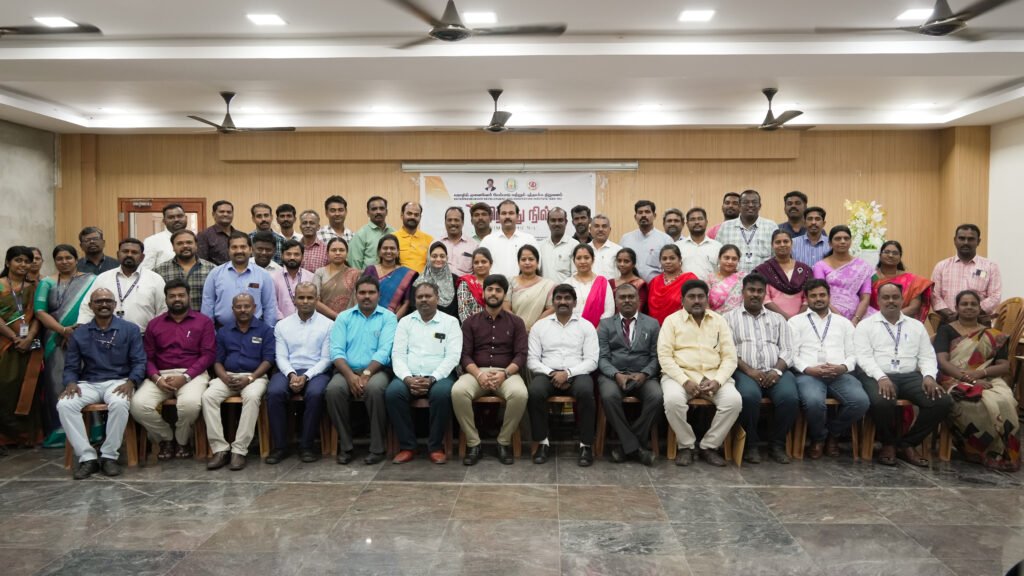
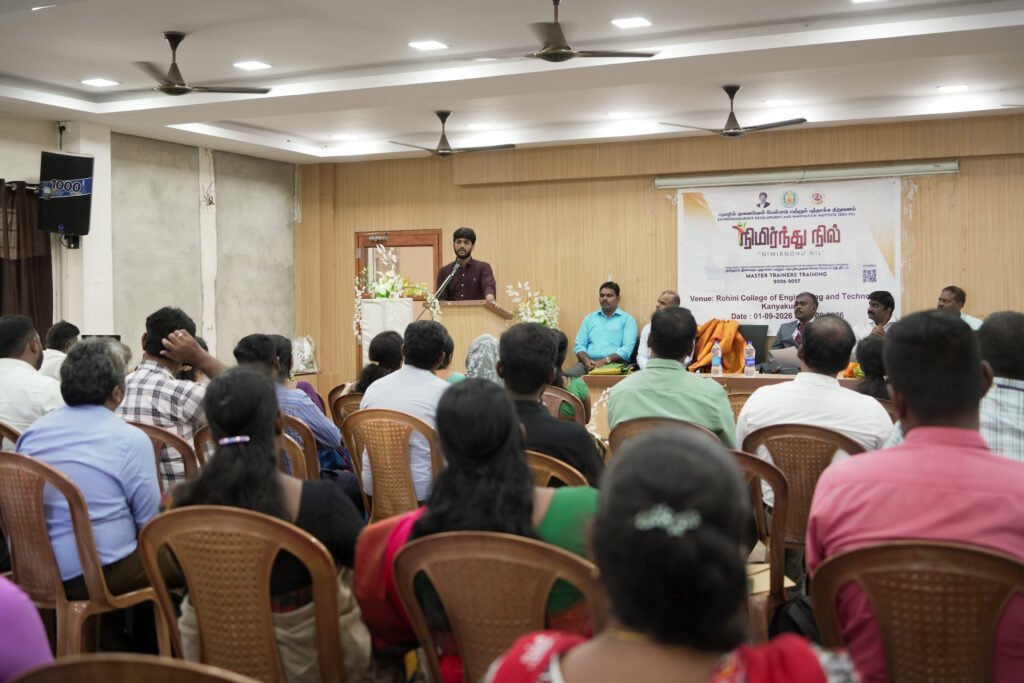
The Tamil Nadu Youth Innovation and Entrepreneurship Development Programme (TNYIEDP) – Master Trainer’s Training Programme 2026–2027 was organized by the Entrepreneurship Development and Innovation Institute, Tamil Nadu (EDII-TN), Department of MSME, Government of Tamil Nadu, at Rohini College of Engineering and Technology, Kanyakumari, from 1 September 2026 to 3 September 2026.
The programme commenced with a Welcome Address by Mr. R. Rajesh, DPM-EDII-TN, Kanyakumari District, followed by an introduction to the programme by Mr. Martin Ruso, Programme Officer, EDII-TN. Dr. R. Rajesh, Principal, Rohini College of Engineering and Technology, delivered the Presidential Address. The Keynote Address was delivered by Dr. S. T. Suvaitharan, Master Trainer & DPM, EDII-TN, Thoothukudi District.
The programme also featured a Felicitations Address by Dr. M. S. Starvin, Asst. Prof. & Coordinator, EDII-TN IEDP Hub, University College of Engineering, Nagercoil, and a Special Address by Mr. Visal Nair Vijay, Master Trainer, EDII-TN. The session concluded with the Vote of Thanks by Dr. M. Siva Baarathi, DPM, EDII-TN, Tirunelveli District.
The three-day training programme aimed to strengthen innovation, entrepreneurship, mentoring, leadership, and training capabilities, enabling master trainers to effectively guide and inspire young aspiring entrepreneurs across Tamil Nadu.